Inherited Firearms: What Happens When a Firearm Is Left to You in a Will?
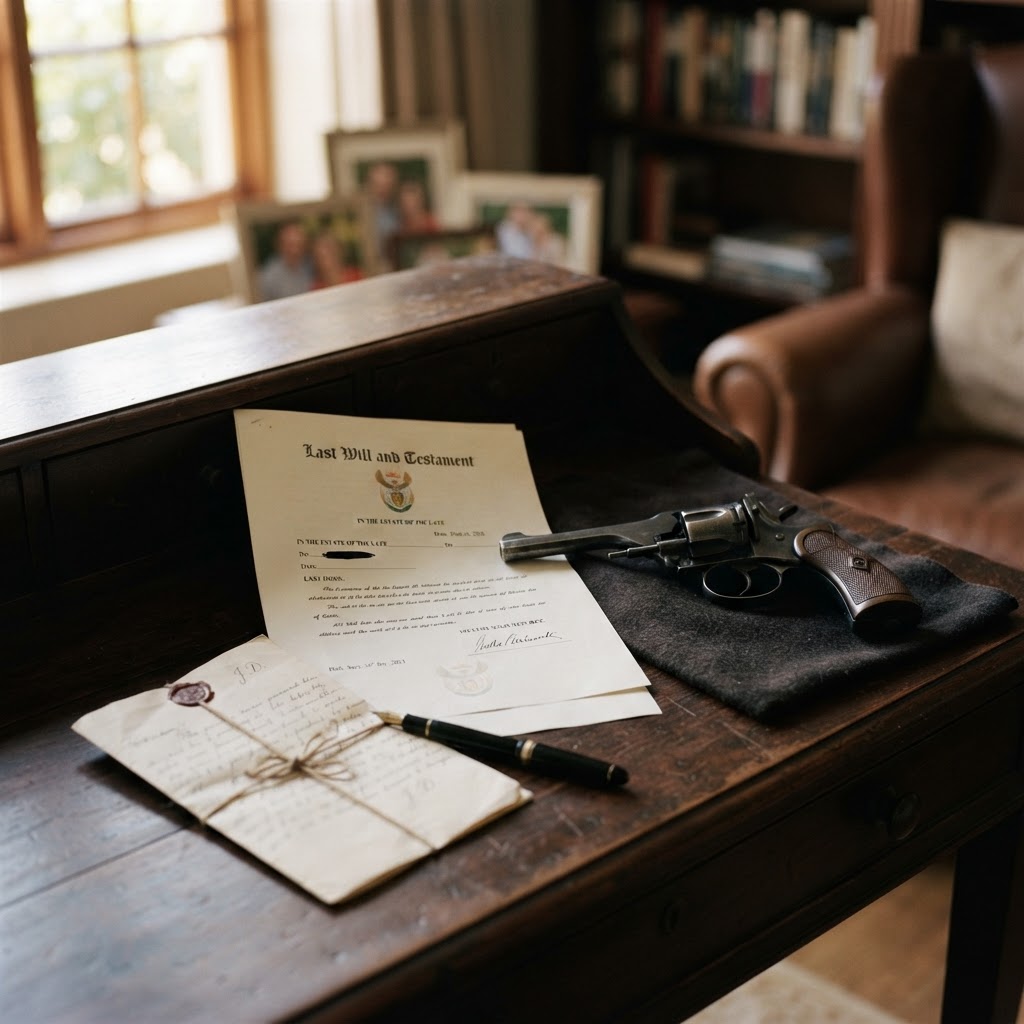
When a firearm owner dies, the firearm becomes part of the deceased estate. If the firearm has been left to you in a will, this does not automatically give you the right to possess or use it. The Firearms Control Act 60 of 2000 requires a person who inherits a firearm and wishes to keep it to apply for the appropriate firearm licence, permit or authorisation.
1. Make sure the firearm is safely stored
After the firearm owner's death, the firearm and ammunition must be kept secure and dealt with as part of the deceased estate.
The executor is responsible for ensuring that the firearm and ammunition are stored lawfully. The executor should contact the local DFO (Designated Firearms Officer) to confirm the applicable storage requirements and whether any permit or other authorisation is required.
If the executor does not have suitable storage facilities, SAPS provides for specific circumstances in which an heir who already holds a firearm licence, permit or authorisation may provide safe custody, subject to the prescribed requirements and the executor's written consent. The firearm may only be stored and not used until the appropriate licence, permit or authorisation has been obtained.
Where appropriate, the executor can also discuss lawful storage options with a licensed firearm dealer or gun shop that provides firearm storage services.
Do not simply take the firearm home, place it in your safe or use it because it was left to you in the will.
2. The executor must report and document the firearm
The executor must deal with the firearm as part of the deceased estate.
SAPS requires the executor to compile an inventory containing details such as the firearm's make, type, calibre and serial number, as well as information relating to the ammunition. The required information must be submitted to the Central Firearms Register within the prescribed period after the executor's appointment.
The executor's Letter of Appointment is particularly important because it is required as supporting documentation when an inherited firearm licence application is submitted.
3. Decide whether you want to keep the firearm
If the firearm was left to you and you want to keep it, you must obtain the appropriate legal authority to possess it.
If you do not want the firearm, or if you do not obtain the required licence or authorisation, the firearm must be dealt with through one of the lawful disposal or deactivation options provided for under the Firearms Control Act.
This can include lawful disposal through a registered firearm dealer or another person who is legally entitled to possess the firearm, depending on the circumstances. SAPS also provides information on surrendering or deactivating firearms from deceased estates.
4. Complete firearm proficiency training
If you want to keep the inherited firearm and do not already have the required competency, you must complete the prescribed firearm proficiency training and practical tests through an accredited training provider.
The training covers the required knowledge of the Firearms Control Act and the safe and efficient handling of a firearm. Once successfully completed, you receive the relevant training/proficiency certificate.
5. Apply for a competency certificate
After completing the required proficiency training, you can apply to SAPS for the appropriate competency certificate.
The application is submitted through the Designated Firearms Officer (DFO) at the police station in the area where you ordinarily reside. Your training certificate and the other prescribed supporting documents must accompany the application.
6. Apply for the inherited firearm licence
Once you have obtained the required competency certificate, you can apply for the appropriate firearm licence using the prescribed SAPS 271 application.
For an inherited firearm, SAPS specifically lists the executor's Letter of Appointment as a required supporting document. The application must also be properly motivated and supported by the relevant documentation.
The type of firearm licence you apply for will depend on why you want to possess the firearm and the applicable section of the Firearms Control Act.
7. Do not use the firearm while waiting for the licence
Being named as the beneficiary of a firearm in a will does not make you the licensed owner.
Until you have obtained the appropriate licence, permit or authorisation, the firearm must remain in lawful safe custody. SAPS specifically states that an inherited firearm may be stored but may not be used until the appropriate authority has been obtained.
The process at a glance
Firearm owner dies → Executor appointed → Firearm secured → DFO/storage arrangements confirmed → Firearm recorded as part of the estate → Beneficiary decides whether to keep it → Proficiency training → Competency application → Competency approved → Firearm licence application → Licence approved → Lawful possession and use
Important: Don't leave an inherited firearm unattended
If you discover a firearm belonging to a deceased family member, do not simply put it away and deal with it later. SAPS has specifically warned families to inform the police about firearms belonging to deceased persons and to follow the correct process for retaining or disposing of them.
The best starting point is to speak to the executor and your local DFO as soon as possible. They can help establish how the firearm should be secured while the estate and licensing process are being dealt with.
A firearm left to you in a will is an inheritance — but it is not automatically a firearm licence.